Bringing Pathophysiology to Life with Interactive 3D Animation
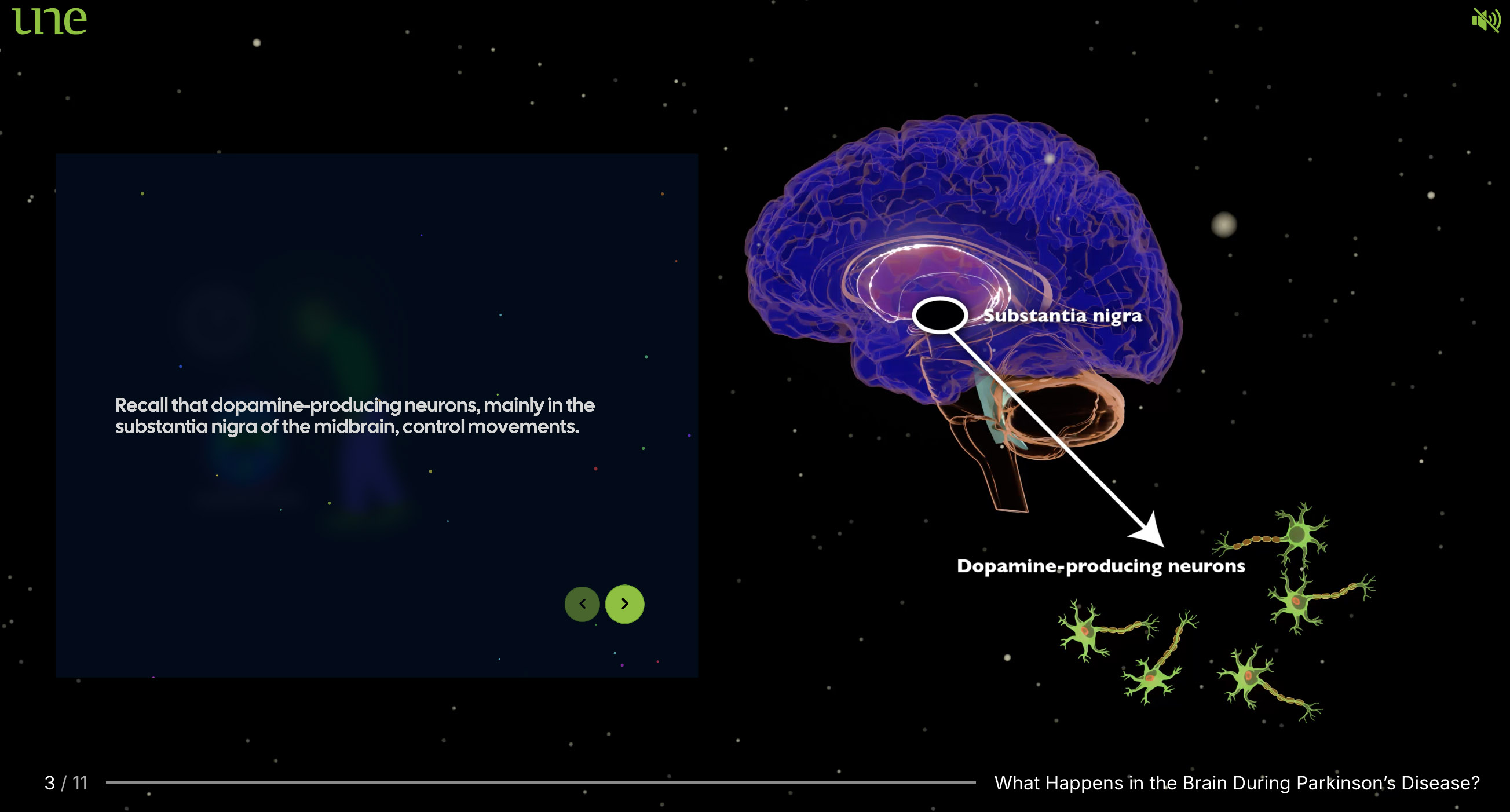
In 2025, the UNE Learning Media team collaborated with Mansi Dass Singh (Lecturer in Biomedical Science, School of Science and Technology) to create a series of interactive animations. The goal of these animations was to assist first-year biomedical science students in developing their understanding of key pathophysiological mechanisms observed in asthma, diabetes, Hashimoto’s disease, stress, Parkinson’s disease, and rheumatic heart disease.
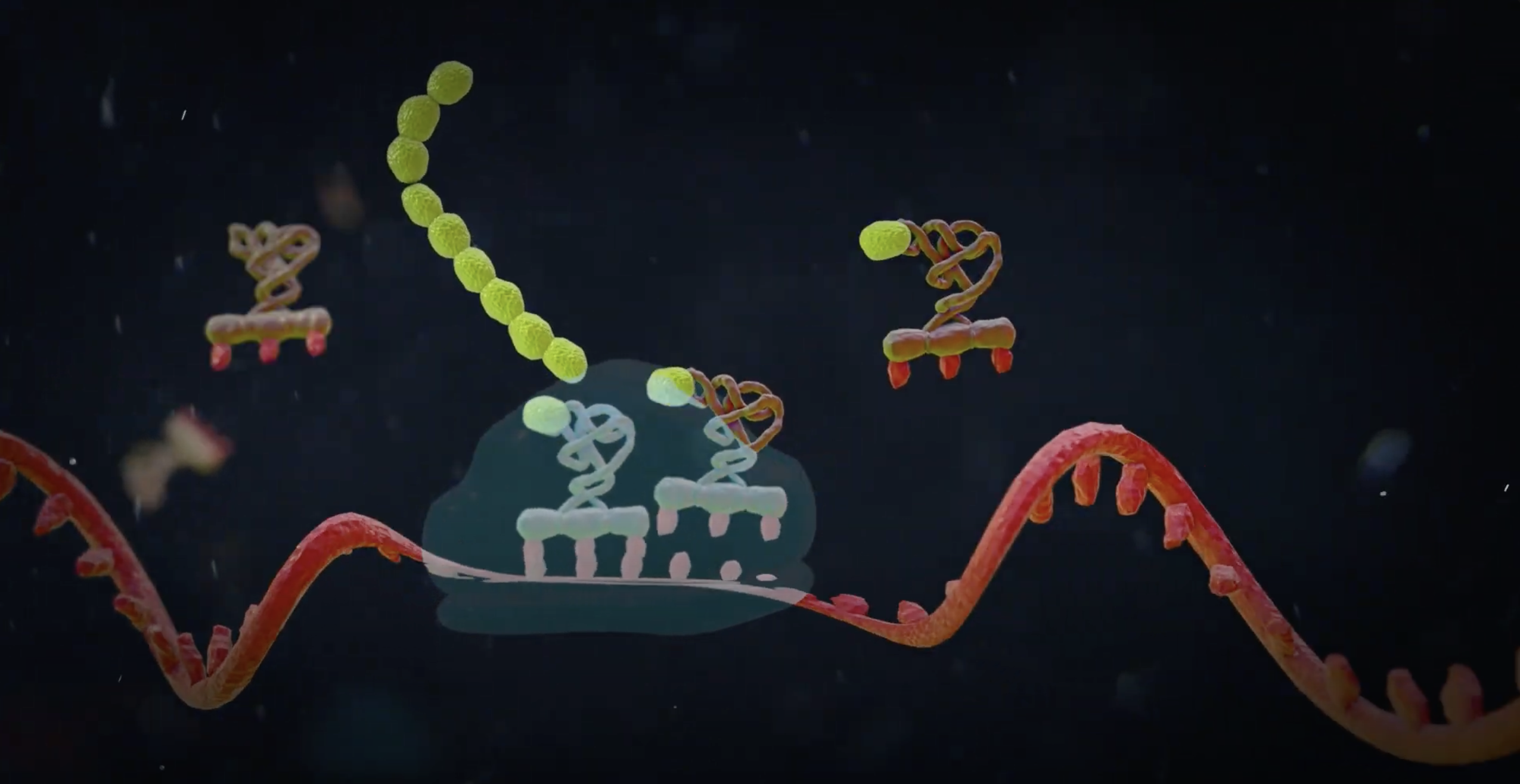
Using 3D animation allowed us to visualise mechanisms occurring inside the body, while also helping students understand the spatial relationships between the anatomical structures involved and the pathways of each mechanism.
As the animator and web content developer on this project, my role involved close collaboration with the subject matter expert (SME) to interpret the educational literature and translate it into clear, engaging visual sequences. Together, we developed storyboards, refined the scientific communication through review and feedback, and identified key moments where interaction could reinforce student learning. The project relied on an iterative collaboration process, with regular feedback between Learning Media and the SME to ensure the scientific content was accurate, the visual communication was clear, and the interactions aligned with the intended learning outcomes. The development process involved a combination of coding, custom 3D development, and the adaptation of off-the-shelf models.
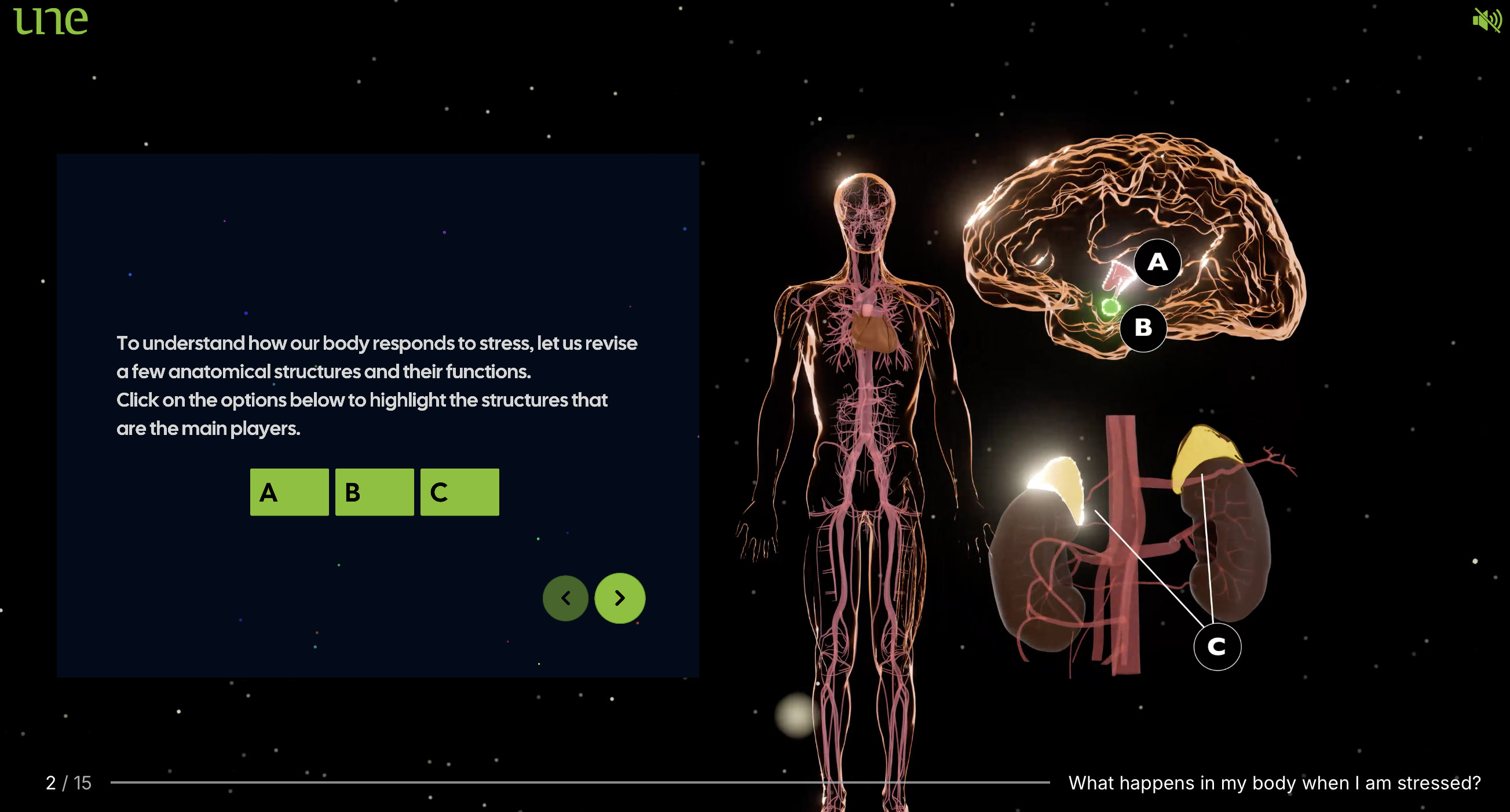
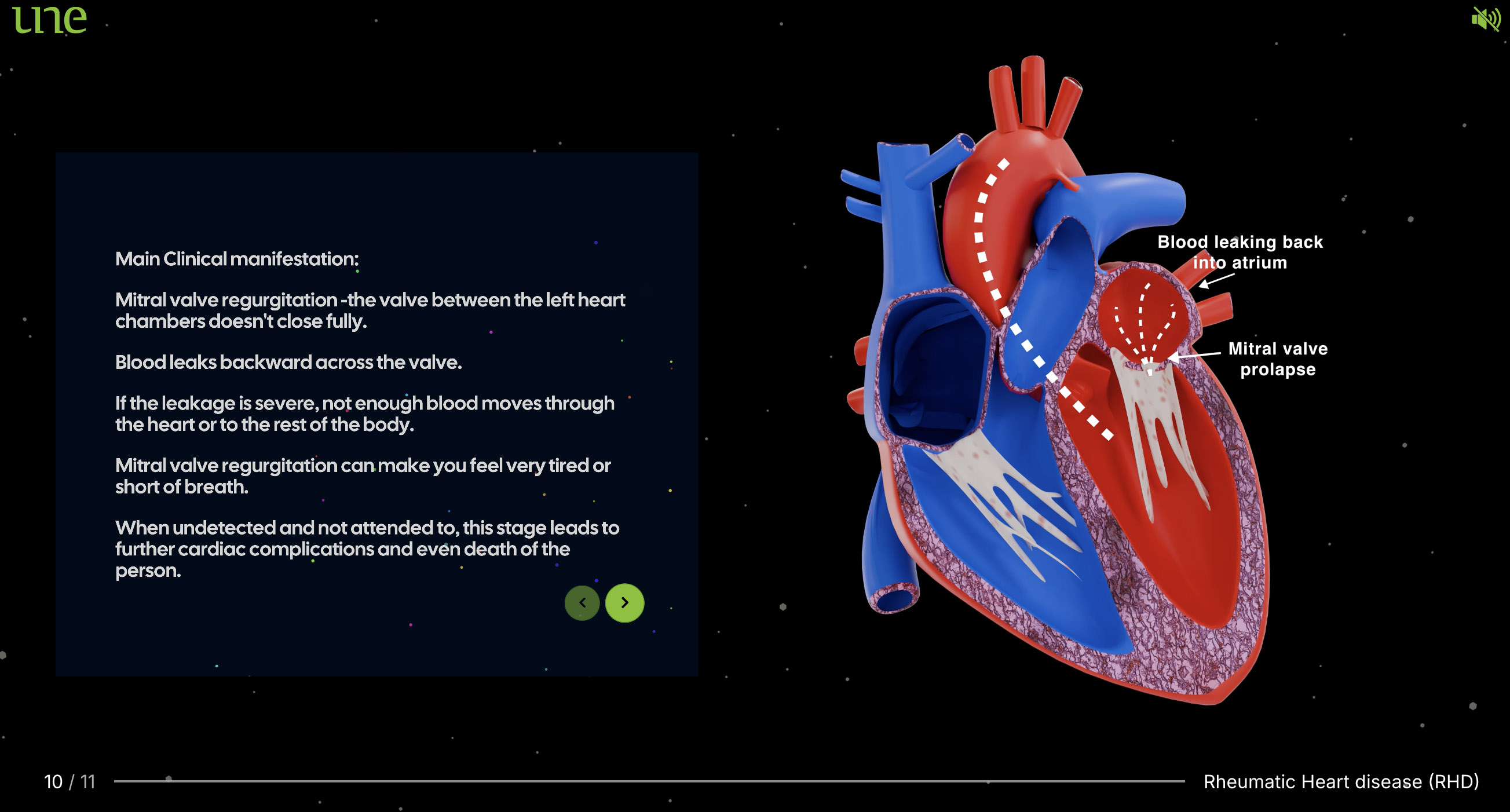
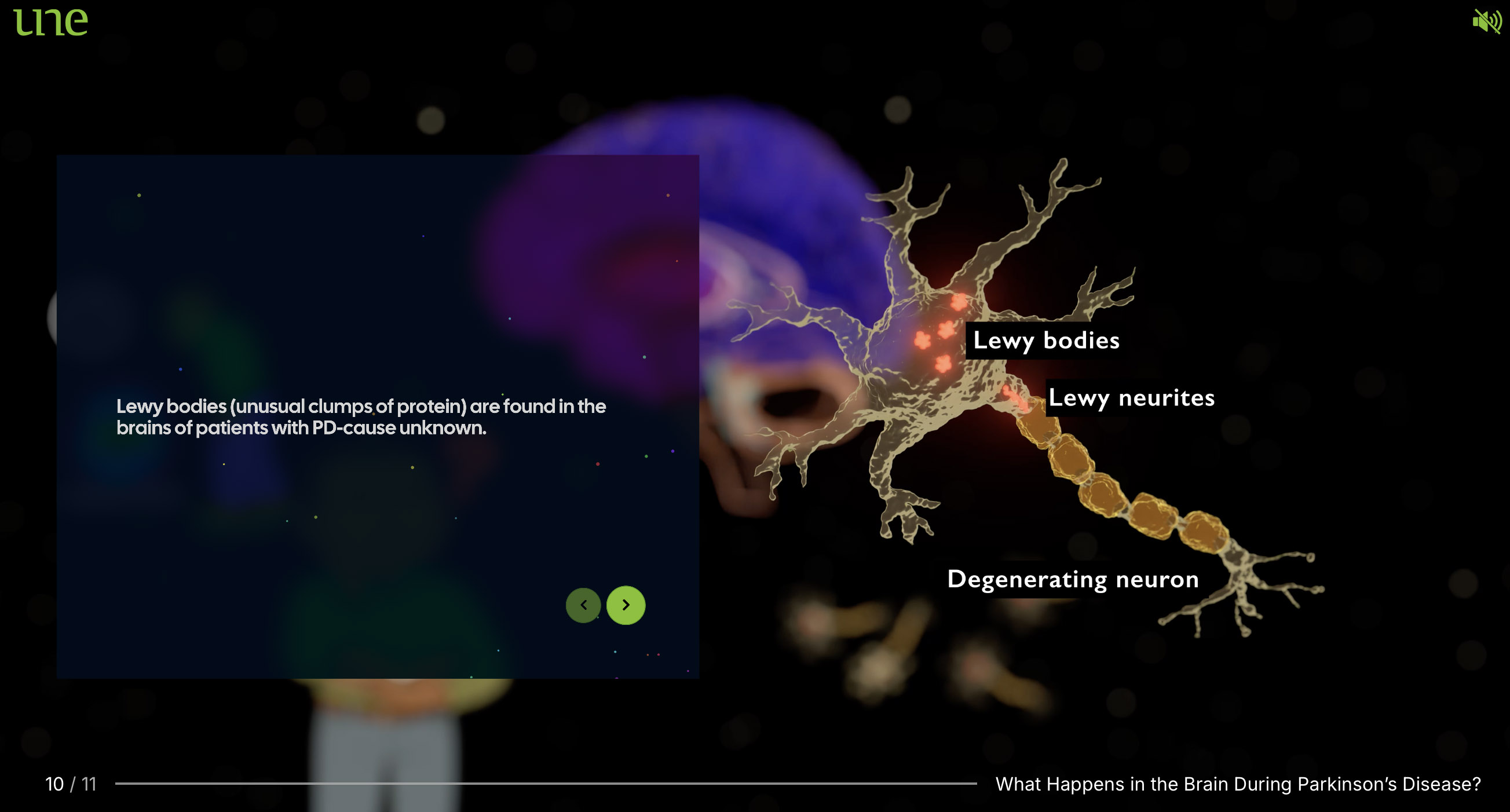
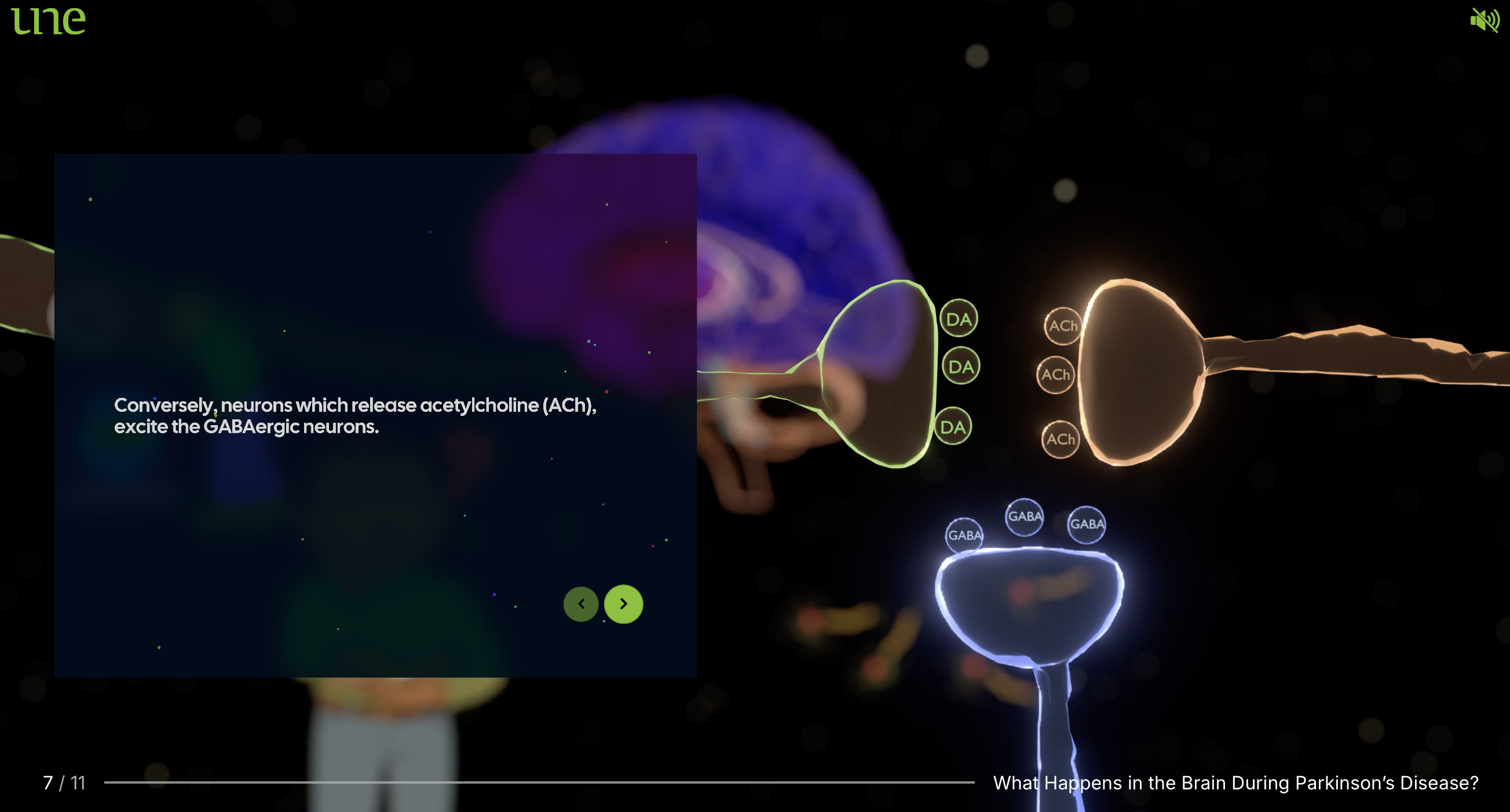
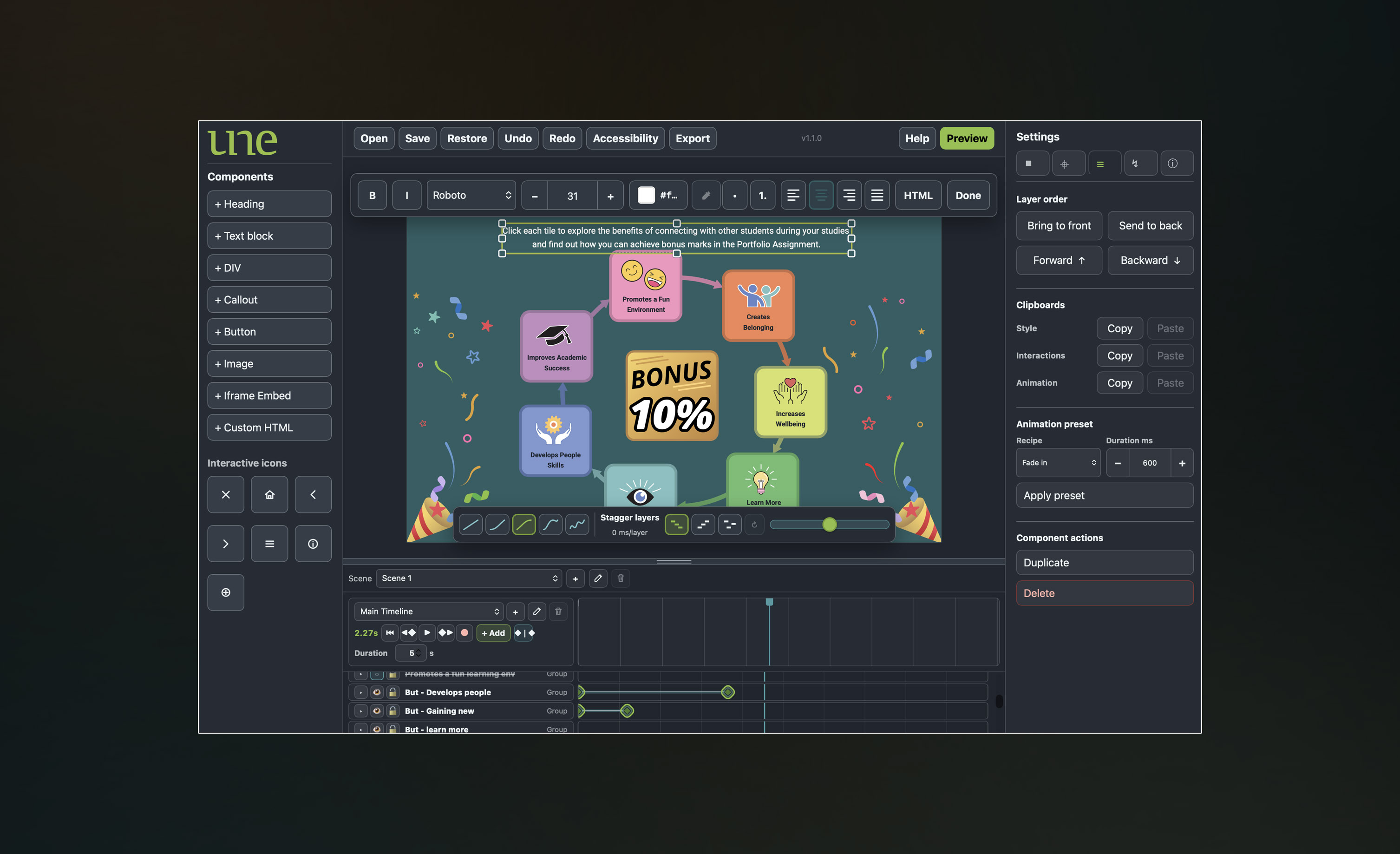
The interactive component was developed in Tumult Hype, supported by a custom code base that allowed us to control the video playhead position of the 3D animations and trigger tailored interactions at key points. These interactions gave students opportunities to reflect on their understanding before progressing, while also providing a convenient way to rewind and replay sections of the content as needed.
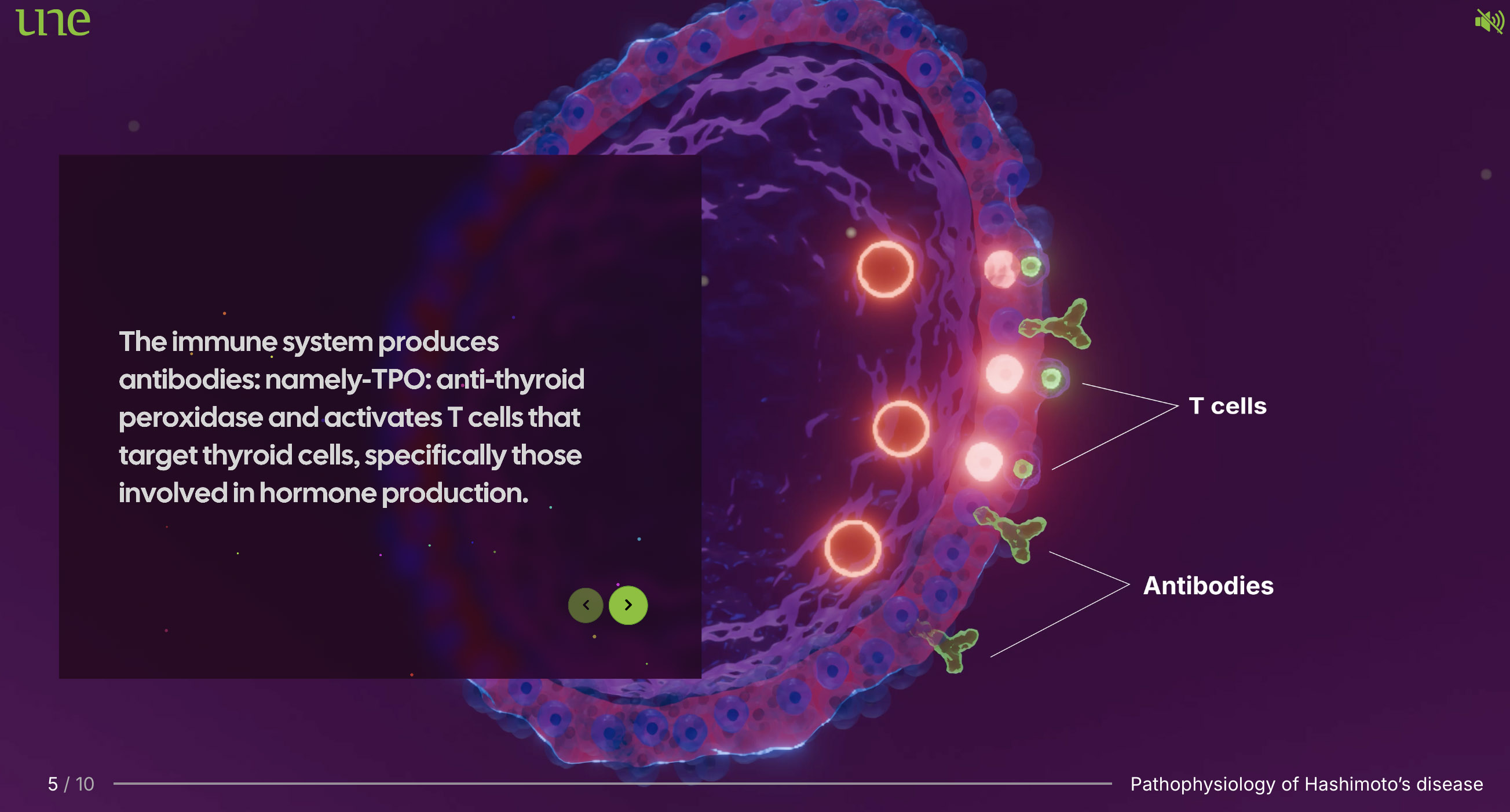
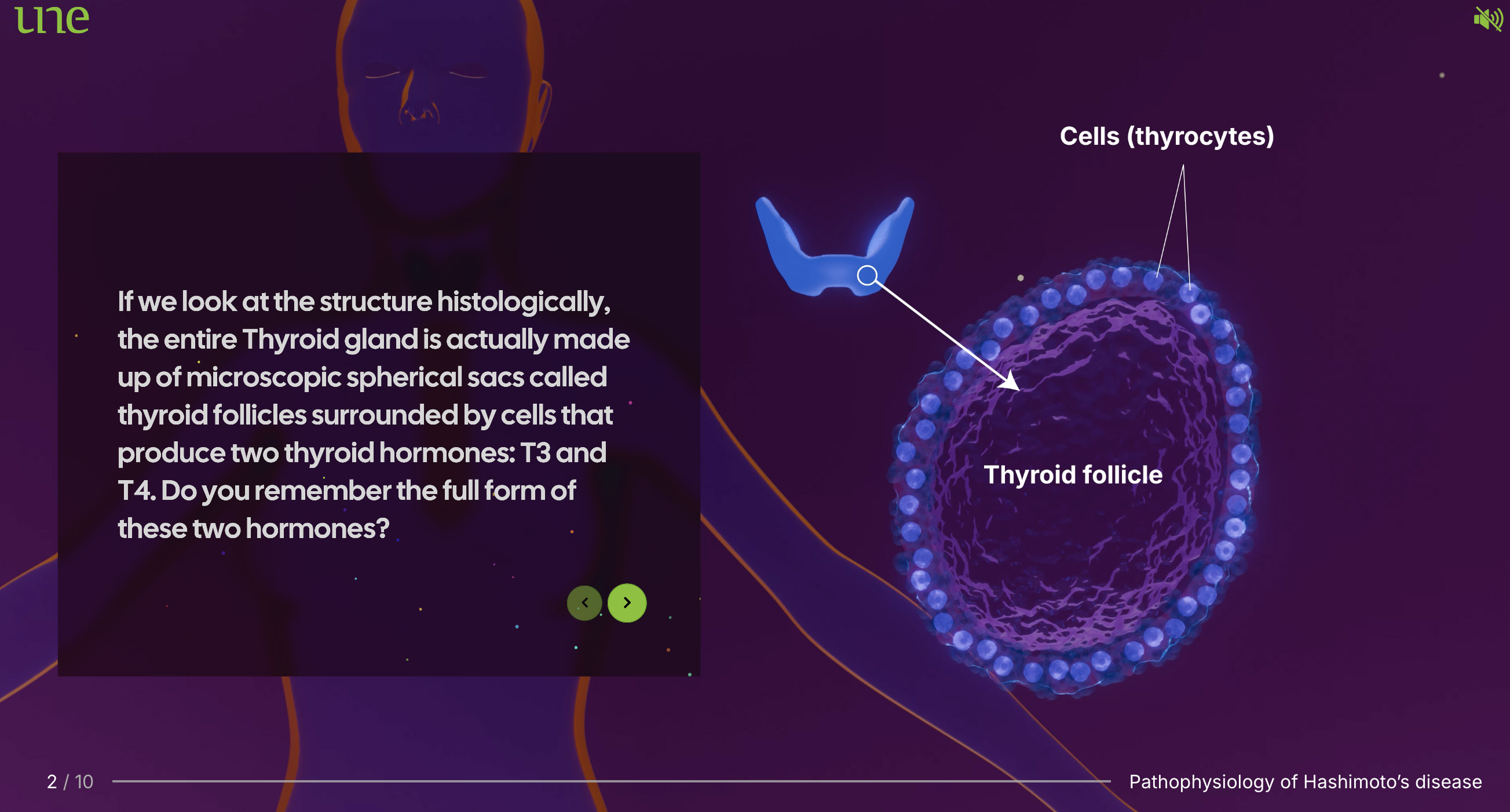
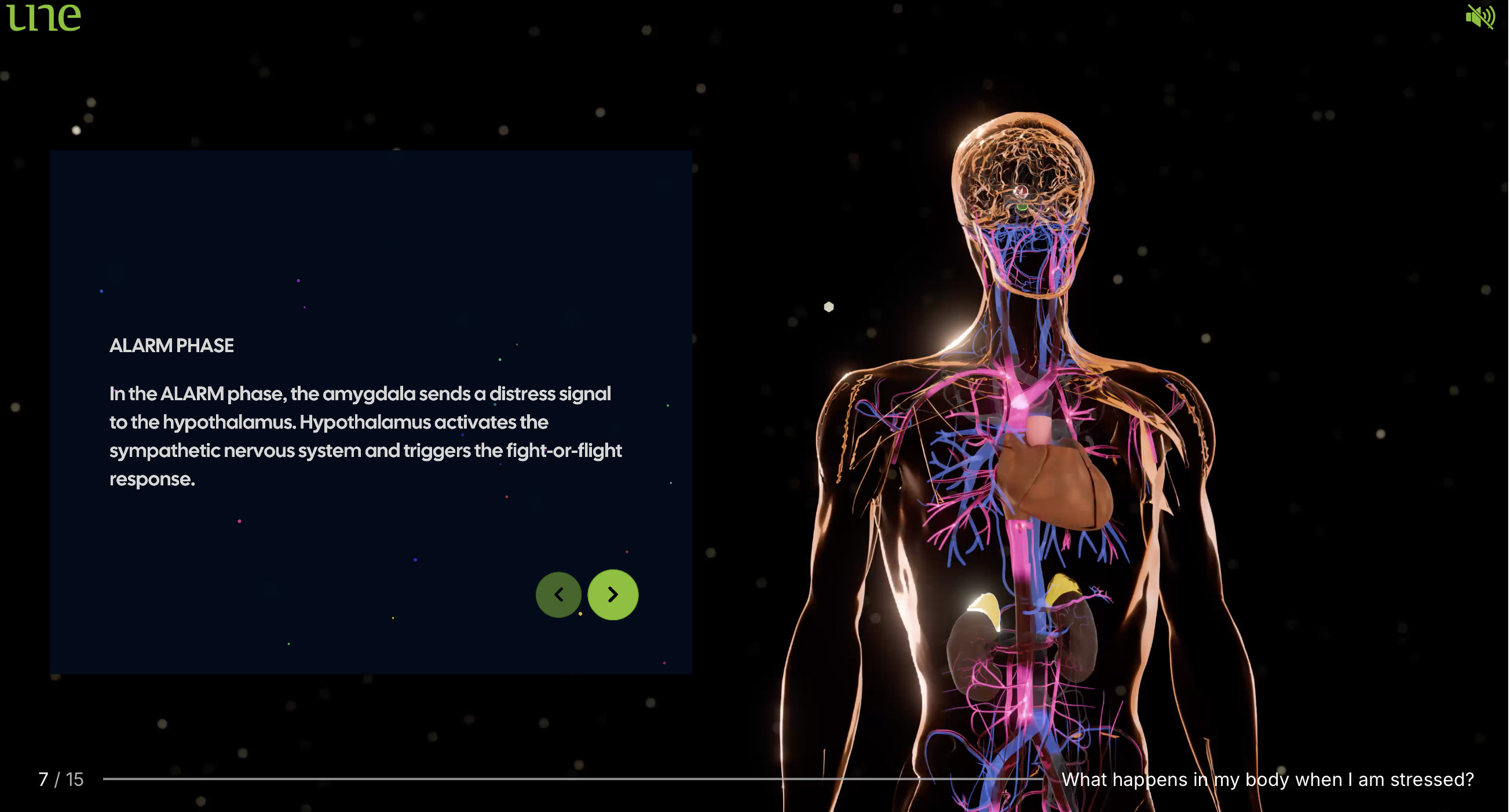
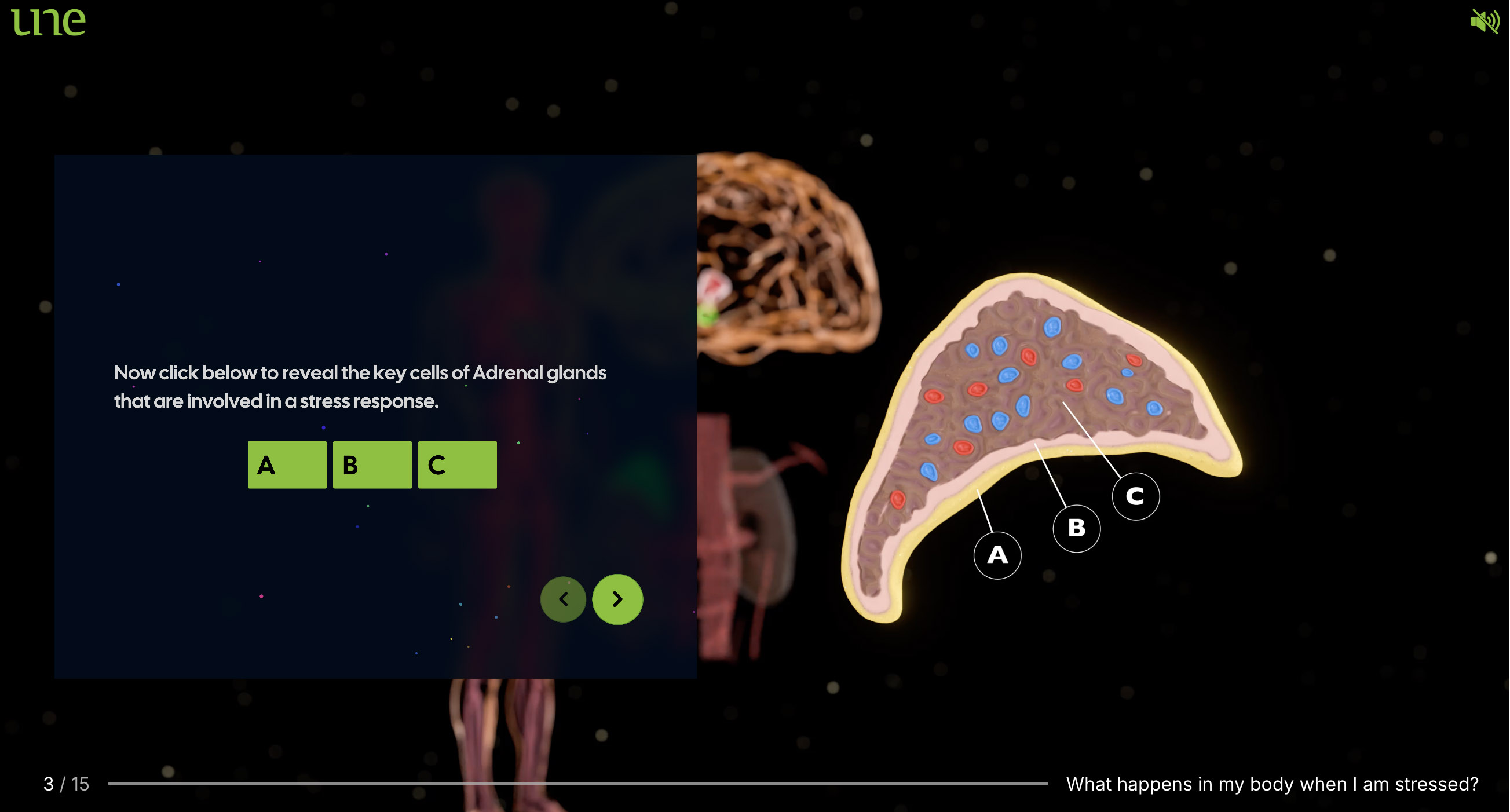
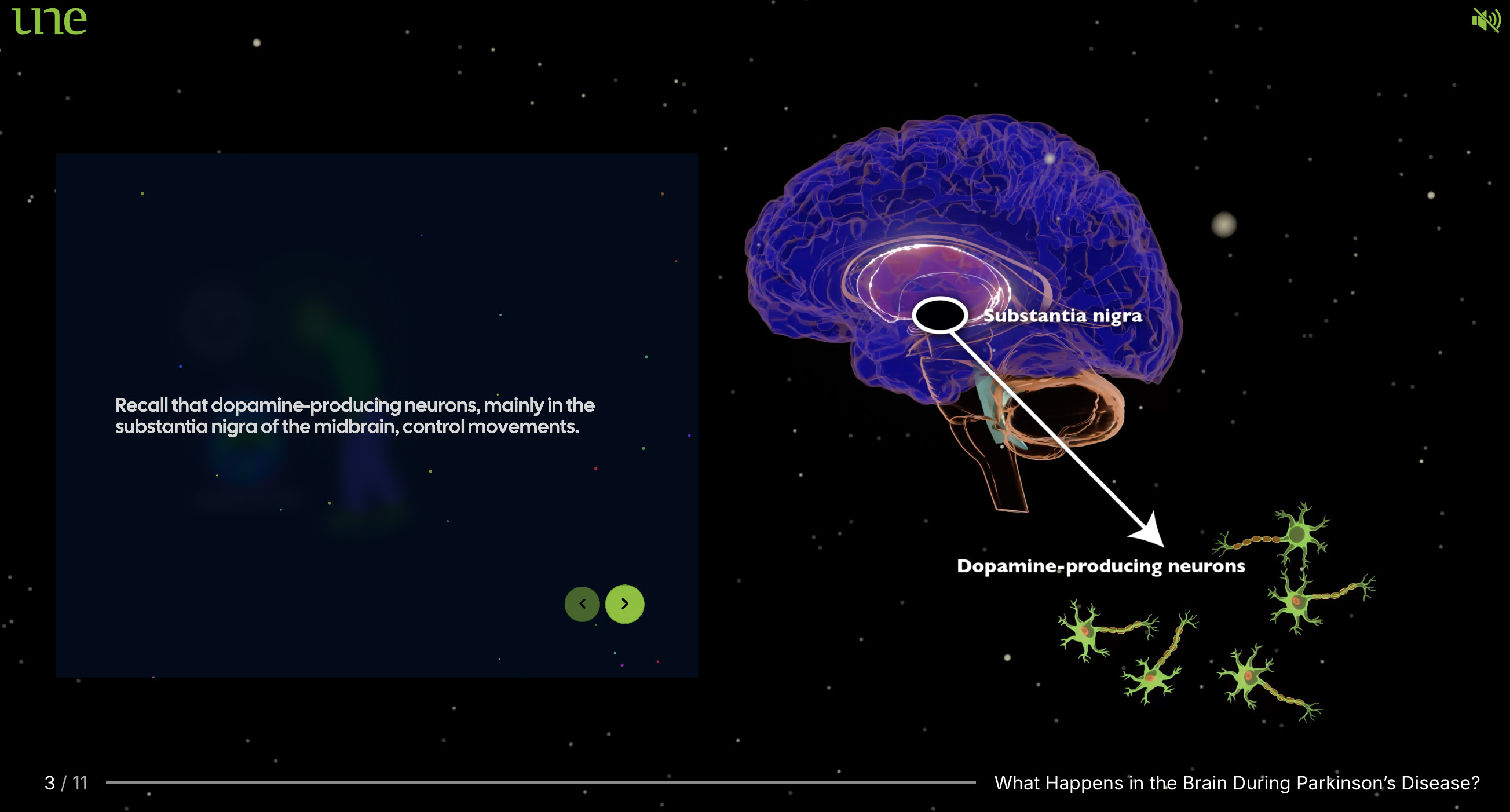
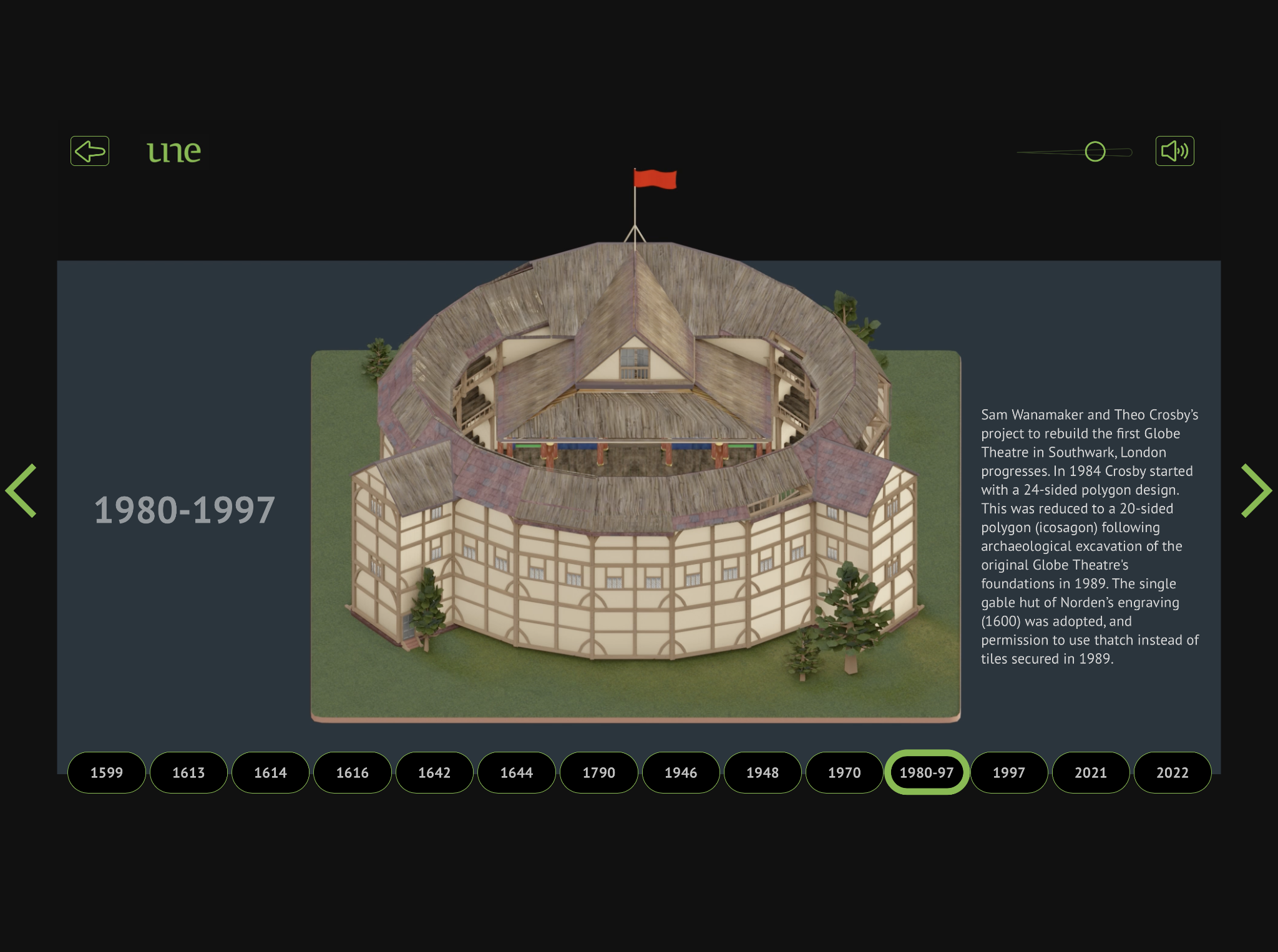
Below are some screenshots from the project.